
Introduction
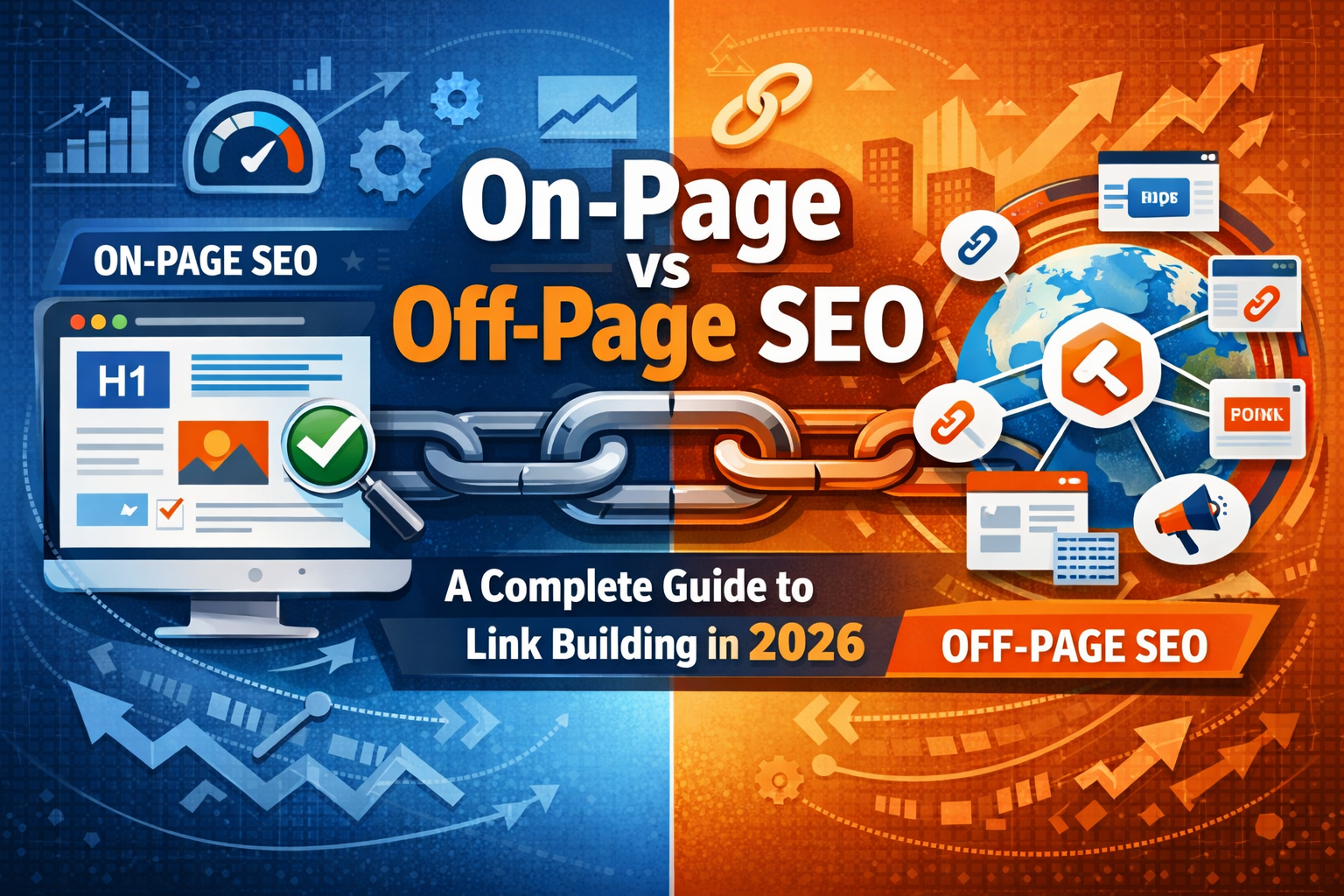
Search engine optimization is built on two foundational pillars: on-page SEO and off-page SEO. While on-page SEO ensures your website is technically sound and content-rich, off-page SEO—especially link building—establishes authority and trust in the eyes of search engines.
Understanding how these two areas work together is essential for ranking competitively in 2026.
What Is On-Page SEO?
On-page SEO refers to all optimization efforts made directly on your website to improve rankings and user experience.
Core On-Page SEO Elements
An effective on-page SEO strategy includes:
- Optimized title tags and meta descriptions
- Proper heading hierarchy (H1, H2, H3)
- Keyword placement in strategic locations
- Internal linking between relevant pages
- Fast page load speed and mobile optimization
- Optimized images with descriptive alt text
SEO Insight: On-page SEO tells search engines what your page is about.
On-Page SEO Checklist (Quick Audit)
Use this checklist to test your on-page SEO implementation:
- One clear H1 tag containing the primary keyword
- At least one keyword variation in an H2
- URL is short, descriptive, and keyword-focused
- Internal links pointing to related pages
- Content length exceeds 1,200 words
- Schema markup implemented (Article or FAQ)
What Is Off-Page SEO?
Off-page SEO includes all actions taken outside your website to improve its authority, relevance, and trustworthiness. The most important factor here is backlinks.
Common Off-Page SEO Techniques
- Link building through outreach
- Guest posting on authoritative websites
- Digital PR and brand mentions
- Niche directory listings
- Broken link building
- Social signals and content sharing
Think of backlinks as votes of confidence from other websites.
Link Building: The Backbone of Off-Page SEO
Link building remains one of the strongest ranking signals in Google’s algorithm.
What Makes a High-Quality Backlink?
Not all backlinks are equal. High-quality SEO backlinks typically have:
- High domain authority
- Topical relevance
- Editorial placement
- Natural anchor text
- Real traffic potential
Low-quality or spammy links can harm rankings instead of helping them.
On-Page vs Off-Page SEO: Key Differences
| Aspect | On-Page SEO | Off-Page SEO |
|---|---|---|
| Location | Your website | External websites |
| Control | Full control | Partial control |
| Primary focus | Content & structure | Authority & trust |
| Key tactic | Content optimization | Link building |
| Time to impact | Short-term | Medium to long-term |
Both strategies must work together for sustainable SEO success.
How On-Page SEO Supports Link Building
Strong on-page SEO increases the likelihood of earning backlinks naturally.
Pages that attract more links usually have:
- In-depth, original content
- Clear structure and scannability
- Data, statistics, or unique insights
- Visual assets (charts, images, tables)
- Clear outbound references to authoritative sources
If a page is not worth linking to, no outreach campaign will fix that.
Best Practices for SEO-Focused Content in 2026
To future-proof your SEO strategy:
- Write for topical authority, not just keywords
- Match content to search intent
- Use internal linking to build content clusters
- Avoid over-optimized anchor text
- Track backlinks and rankings regularly
Modern SEO rewards usefulness, not manipulation.
Conclusion
On-page SEO and off-page SEO are not competing strategies — they are complementary. Technical optimization and high-quality content lay the foundation, while link building amplifies visibility and authority.
A successful SEO campaign treats both as equally important parts of a long-term growth strategy.
